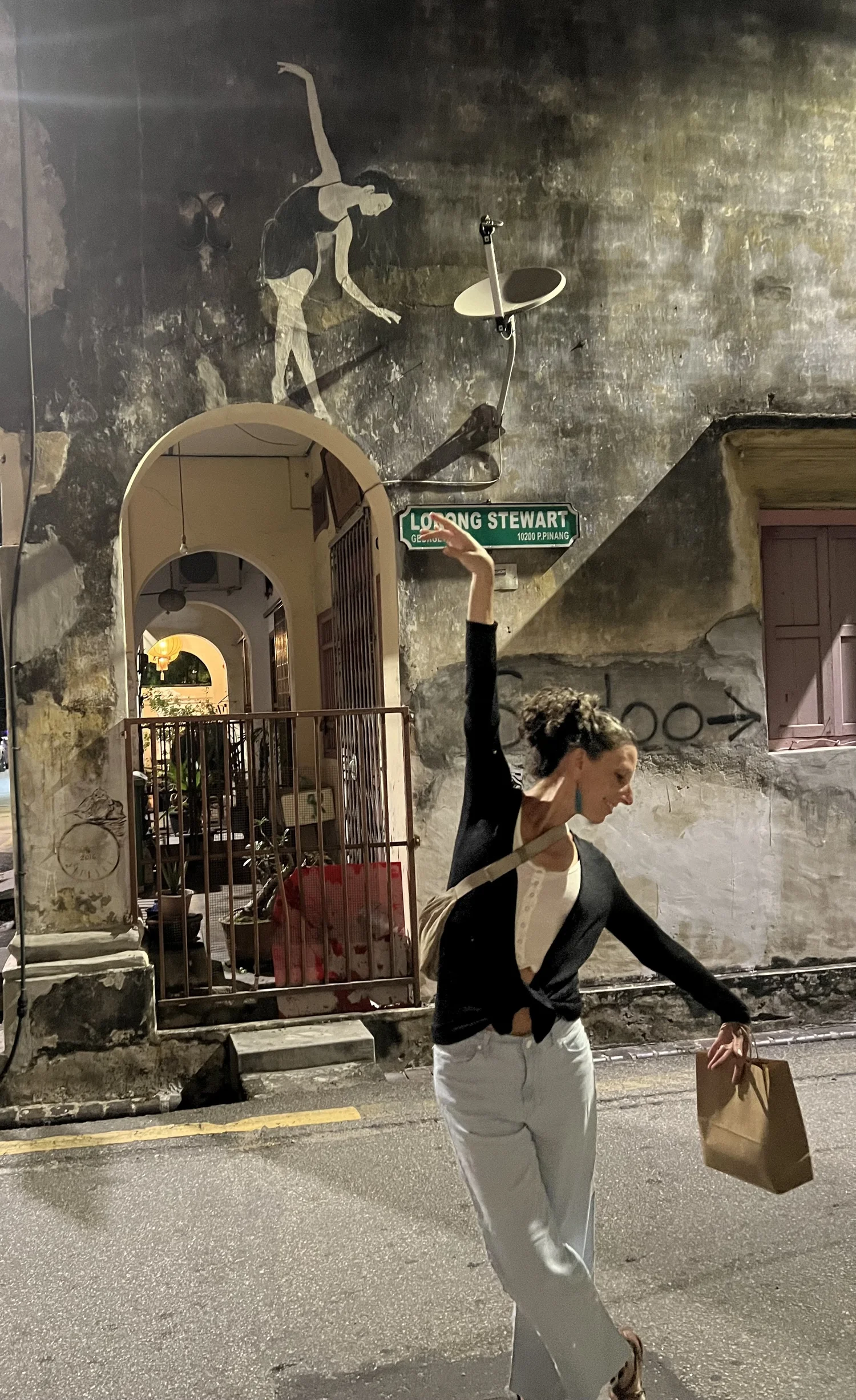
Beth H. Glick is a consciousness researcher, writer, and advisor whose work examines how shifts in perception reshape leadership, institutions, and culture.
Her doctoral research at the California Institute for Human Science investigates the edges of consciousness, including synchronicities, mystical states, and extended perceptual capacities, drawing on psychology, philosophy, neuroscience, and religious studies. She holds a master's degree from Harvard Divinity School, and her peer-reviewed work appears in the Journal of Consciousness Studies, the Journal of Scientific Exploration, Anthropology of Consciousness, and World Futures.
Beth has spent nearly two decades advising philanthropic and civil-society organizations across more than fifteen countries, including Amnesty International, Sri Lanka's largest NGO, and an India-based venture philanthropy fund. From 2010 to 2023 she co-founded and co-led ChangeCraft, a global consulting practice serving mission-driven organizations. That work now fuels her research and field-building practice: thinking, researching, and building at the edges of consciousness and on the crossings back to the institutions, leaders, and lives they touch.
Her central question: What lies beyond the limits of our current models of perception and meaning, and how does crossing those limits change how we live, lead, and participate in the world?
The Path
For most of my career I worked on the problems that keep civilizations awake: mass atrocities, climate change, nuclear threat. I worked on how organizations facing those realities could be designed to actually move: strategy, structure, culture, the mechanics of collective action under impossible conditions.
I was effective. I was also going numb. An apathy was settling in, not about the work, but about whether anything we were doing could reach past the surface. Underneath every strategy document and theory of change, the same questions kept calling out, unanswered. How does violence become ordinary? What lets a species see its own extinction approaching and look away? Why do people in the same conditions develop such different capacities for cruelty and conscience? What are we filtering out, and at what cost? We were applying solutions that would never reach these questions. And I was slowly losing the capacity to hear them.
Over years I had overdeveloped the analytical, dissecting, polishing parts of how I knew, a muscle the work rewarded and kept reinforcing. Other ways of knowing that had been with me since childhood, intuitive, empathic, sensing, had quietly gone underground. The overdevelopment made me effective. It also rendered me impermeable.
A stretch of family travel cracked it open. What came back wasn't just intellectual; it was embodied, direct, unmistakable. I followed it into practice, into study, into experiences I couldn't explain and couldn't dismiss, and eventually into doctoral research on the edges of consciousness: synchronicities, mystical states, extended perceptual capacities. It took everything I had built with the left hand and everything that was returning through the right.
I have come to believe that our current models of perception and meaning are too narrow for the moment we are in, and that there is already substantial evidence, in rigorous scholarship and lived experience alike, for something more expansive.
As I began speaking about this work, people started finding me, each carrying an experience they had never said aloud, or had said once and learned not to repeat. The pattern is unmistakable. The silence is the anomaly.
My work now is to think, research, and build what carries that shift forward: into conversations, organizations, fields, and eventually into the mainstream.
Education
- Doctoral researcher, California Institute for Human Science (CIHS)
- Master of Theological Studies (MTS), Harvard Divinity School
Peer-reviewed publications in
- Journal of Consciousness Studies
- Journal of Scientific Exploration
- Anthropology of Consciousness
- World Futures